Welcome to the RACER Mailbag. Questions for any of RACER’s writers can be sent to mailbag@racer.com. We love hearing your comments and opinions, but letters that include a question are more likely to be published. Questions received after 3pm ET each Monday will be saved for the following week.
NOTE: The Mailbag will take a break next week to go off and do whatever it is that mailbags do when they’re on vacation, but keep sending your questions in and we’ll run them when it returns on January 14.
Q: I’ve started reading John Oreovicz’s book Class of ’99 and it’s been a great read so far. What has amazed me about CART history, especially through the 90s, was the variety of choices teams had with chassis and engine manufacturers. As much as I would like to see another engine manufacturer enter IndyCar, it would be nice to see a chassis maker be included once the new IndyCar regulations start just for the sake of seeing a wide variety of body styles on the cars.
After reading some of your articles about the upcoming IndyCar chassis for 2028, do you perhaps see other chassis manufacturers like ORECA, Duqueine or Lola throw their hats into the ring to compete with Dallara?
Brandon Karsten
MARSHALL PRUETT: Happy to see Oreo finding a new lane for himself with racing books. I have the 1999 book as well and hope to read it soon; that was my one year working in CART, so I look forward to seeing what’s been documented.
Chassis variety was among my favorite things while working in 1980s and 1990s open-wheel racing, but like that era, the appetite among team owners for multiple car makers and tire makers is long gone. Nobody wants to make the wrong choice and have a Lola-Goodyear if the ORECA-Firestone is the combo to have, or vice versa.
I often think of Chip Ganassi and Carl Haas whenever this topic comes up. Chip was right there in Year 1 of Reynard’s IndyCar program in 1994 and had Ford/Cosworth engines and Goodyear tires. Haas, as the Lola importer, was using the same engine and tire solution and won the CART IndyCar Series championship in 1993 with the Lola-Ford/Cosworth-Gooyear package.
By 1995, the Reynard was strong, and by 1996, it was ready to take a big step forward, but Ganassi’s dynasty wouldn’t have launched if he’d stayed with the Ford/Cosworth and the Goodyears. He rolled the dice by switching to Honda, which had a single win to its credit, and Firestone, which had just returned after being gone for decades.
Staying with the Reynard-Ford/Cosworth-Goodyear solution he’d used in 1995 would have been the safe bet, but he broke from conventional thinking and that series of choices delivered three straight titles while Lola, Ford/Cosworth, and Goodyear – along with the once all-powerful Newman/Haas team – retreated and lost their place atop the sport. Bold move with bold results.
That’s the way it was back in the day, and it sucked if you guessed wrong and didn’t have the budget to buy your way out of the mistake and had to race with your lesser chassis or tire (or engine) all year. Those fears have been gone for a long time, which makes the idea of team owners ignoring their fears and pushing the series to give them new chances to fail seem like a non-starter.
So, the ring isn’t open for anyone other than Dallara. Dallara is the one and only official IndyCar chassis supplier. But where I’ve heard there could be interest, and Lola is the latest I’ve heard this about, is in supplying the next Indy NXT chassis. Dallara also has that exclusive business with its spec IL15 chassis.
Q: Why isn’t the new IndyCar going to be named the DW28? Or more specifically, shouldn’t it be the DW28?
Wheldon exemplified literally everything an IndyCar driver could seek to be or attain. Anyone else and I would think the Lionheart moniker to be hyperbolic. Not Dan. He literally died charging headfirst into a fight that would pay nearly nothing, and that he was well aware was highly dangerous. My admiration was not post-hoc, either (I still have my Target No.10 from Indy in 2008 – it will be a treasure forever) and sitting in Turn 2 during the race, I still remember how his line exiting the corner was different than every other driver. His memory and his finishing record at Indianapolis deserve to be recognized in perpetuity for the fearlessness and genius that he showed us all.
dce
MP: Dan was responsible for developing the IR12 during the summer of 2011 and died in October of 2011 after serving that test pilot role for IndyCar and Dallara, which made Mr. Dallara’s decision to rename the IR12 as the DW12 a fitting tribute.
I loved Dan as much as anyone and considered him to be a friend, but I don’t see the connectivity between the IR28 and maintaining the DW naming convention. Nearly two decades will have passed between the development of his car and the racing debut of the next new car, and that’s where the strands of connectivity break for me.
If anything, I’ve heard more people mention naming the new car after another late friend, Justin Wilson, in deference to the inclusion of the aeroscreen, but both men suffered helmet strikes, so I don’t see the JW28 being any more fitting or deserving than the DW28.
Justin died in 2015, so if the new car arrived in 2018, I’d probably have a different opinion about naming it the JW18, but since we’re talking 2028, and the series that commissioned the IR28 is owned by completely different people with no administrative or legacy-related ties to Dan or Justin, I’m good with the name they’ve chosen.
The integrated windscreen on the 2028 IndyCar has led to some suggestions that it be named in honor of Justin Wilson. Jeff Zelevansky/Getty Images
Q: Long time Mailbag reader but this is the first time asking a question. I am going to my first Rolex 24 in less than a month with a good friend of mine. I have never been to an IMSA race before and have always wanted to. We will be there for all four days and I am looking for suggestions on what to do. What are your thoughts on places around the track to catch the action, and any events going on? Any thoughts on places to eat or anything you can think of for the trip?
Matt, Fort Wayne, IN
MP: Great to hear and see you there! The downside of attending races as a profession is I’m there to work, and in endurance racing, that usually means a lot of long days, which makes my experiences in and around Daytona a lot different to that of a fan coming in with open days to fill with adventure.
There’s an entertainment district across from the track – adjacent to the NASCAR/IMSA headquarters – with some good restaurants and a movie theater. The rest that comes to mind falls into familiar places – chain stores and whatnot – you’ve likely visited in Fort Wayne. On the rare bouts where I’ve had truly free time, I’ve gone searching for thrift stores to see if I could find any cool or old Rolex 24 or Daytona 500 t-shirts and related ephemera.
While at the track, here’s what RACER’s Graham Goodwin shared:
Matt
The great thing about the Rolex 24 is that there is plenty pot time to soak up all sorts of experiences, trackside, from the stands and around the garage areas too.
The grid walk and driver introductions are open to all and, whilst it can get mighty crowded there’s real atmosphere.
For the start, take to the stands, it’s by far the best view – go high for the best views, go low for the best experience – and watch the opening laps from the comfort of the bleachers!
After that get to the infield and do a bit of fence hanging, you can get to the fence pretty much from the exit of Turn 1 right along to the banking on the back stretch and, better still, you get to tour ‘vendor row’ while you are doing it too!
The views are amazing and there are stands along the way to sit, chat to other fans and rest your by-then-weary feet.
Keep an eye on proceedings, and as the cars start to fall by the wayside the garage area wakes up fast. Give the teams space to work and you’ll get a ringside view at any garage of just what makes a race crew special, fixing the seemingly unfixable in a timeframe that would make most road car ‘shops blush!
Repeat it all again in darkness because that’s when the real magic of 24 Hour racing happens.
Q: Reading all the news about Honda and the new engine formula, it appears that Honda isn’t excited about pouring more money into IndyCar because they want to be more electric, and they’ve taken hybridization as far as it can go. So as result they feel like they will get no ROI.
It would be great to see a manufacturer get into the game and focus on fuel economy. There has to be a way to make cars fast and more fuel efficient. An engine that can deliver top performance and more MPG would have a distinct advantage.
Let’s face it. Electric cars are not catching on in the consumer market, and government regulations are no longer favoring them. So, there would be an incentive for a manufacturer to refocus on internal combustion engines and there’s no better place to demonstrate advances in performance and fuel economy than IndyCar. Just my two cents and wishful thinking.
Tom, Blaine, MN
MP: We have different takeaways on Honda. I don’t see what you’re seeing, and I’ve only heard from Honda about it wanting more emphasis on the hybridization and nothing whatsoever about feeling it has exhausted all there is to get from racing with hybrids.
The auto industry _ at least the industry as it interacts with the U.S. _ is reacting to the latest change to exhaust emissions standard which, prior to the Trump administration’s reversal, pushed the industry to go all-in on electrification due to the need to meet the strict emission reduction mandate.
Bigger car companies went hard on electric vehicles to comply with our governmental regulation, and not because they loved EVs, so with the relaxing of the emissions standard, the production emphasis with a Honda, for example, is to lock in on gas engines and hybrids.
Chevy and Honda have fought for ages to win the fuel economy war in IndyCar, and it has only intensified with the arrival of hybrid IndyCar engines. So that already happens, and the engine making more power and more mpg tends to do most of the winning in IndyCar.
But it’s hard to promote fuel economy when you’re happy to reach 4mpg!
Q: I’m a Gen Z IndyCar fan and I am very excited for the IndyCar video game coming out soon. However, I’ve been waiting for some time for it since it was first announced for release in 2023. I wanted to put out into the aether that it’d be rather nice if the game makers put out some kind of expansion pack or DLC which allows the player to play the seasons we “missed.”
Since the game was to come out in 2023, the ‘23-‘25 seasons would be lovely to see in-game. I’m sure they’ve still got the licenses to the tracks and racers. MotoGP did something similar with their 2022 game, where they had a full playable 2009 season with all the tracks and riders which appeared that year.
Also, since it’s iRacing, they could definitely add in a few legacy tracks which don’t appear on the IndyCar schedule now, but that used to, and which iRacing have the track-scans of. Obviously, I refer to Kentucky and Pocono, as well as some others. Again, the MotoGP games often included things like this, Laguna Seca hadn’t appeared in the sport since 2013, yet my copy of MotoGP 24 has it, playable with the modern bikes. Pretty great feature, if you ask me.
Taylor, KY
MP: For all of the years of disappointment that’s been expressed by IndyCar fans, I can’t wait to see the reaction of folks like you who’ve had to be patient and held the hope for a great game to be delivered.
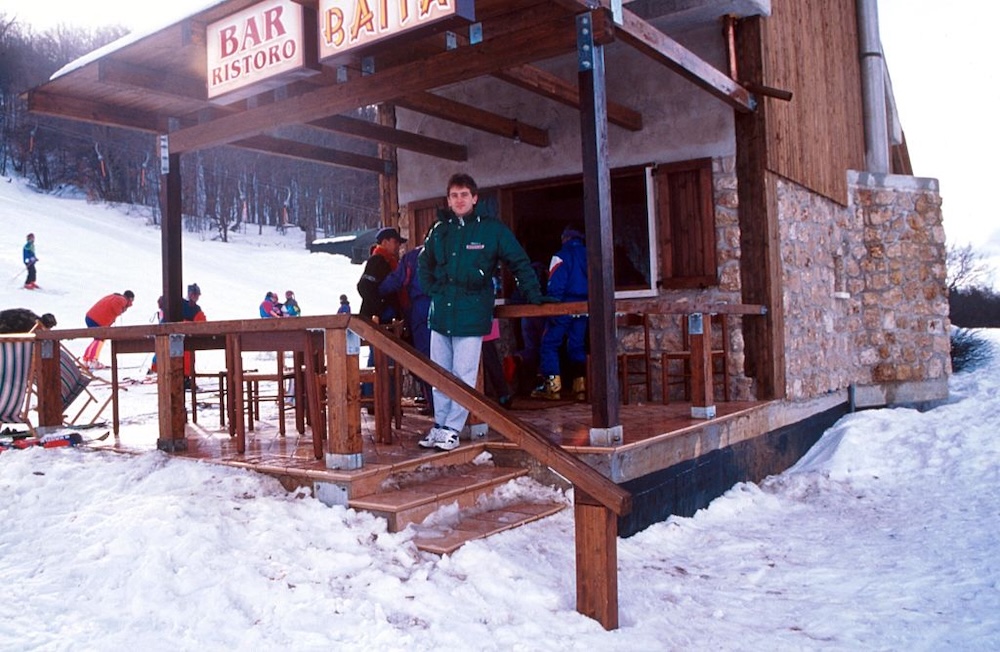
I don’t have any shots of the new IndyCar game, so instead you get Jarno Trulli at a ski resort. Kleene/Getty Images
Q: Am I missing something about the new proposal for the 2028 2.4 V6 engines? IndyCar says they want to let the engine manufacturers create new engines that are less stressed, therefore less expensive to maintain and last longer between rebuilds, as well as perhaps encourage new carmakers to enter the sport. Yet these engines, though bigger displacement, will rev to 12K instead of 10K, and have more boost. How do all those equate?
Thomas Kahl
MP: Yes, you’re missing some things. The 2.2s rev to 12K and the 2.4s that were built and tested and being readied to go racing in 2023 revved to 12K. The 2028 engines will be built with more material in places where the manufacturers have said it would help durability. This is what the experts who make the engines have said they wanted and needed and that’s what they’ve been given.
Q: Given the spec nature of the series, what are teams allowed to manufacture themselves? The McLaren announcement about their new facility mentioned moving this in-house. Dampers? Anything else?
Doug Farrow, Plymouth MN
MP: The rulebook outlines everything! Here’s the cut-and-pasted highlights:
14.2. Development Areas, Reproduction Parts, and Direct Purchase Parts Development Areas The following areas are open for development. The mating part(s) must remain as supplied, and the areas must otherwise comply with the Rules.
- Non-Engine oil and greases,
- Dampers and inerters (Rule 14.10),
- Treatments and coatings of the gearbox and/or gearbox internals, provided intended shapes are not altered.
- Treatments and coatings of all bearing surfaces.
- Bearings and bearing races (excluding upright and gearbox bearings) provided they are of the same size, type and design as originally provided by the Approved Supplier. Hybrid and/or ceramic bearings are not approved for use.
- Fuel cell collector pot (the fuel cell collector pot must remain inside the fuel cell, must have a -6-port plug drain at the base of the collector, and must fill during an INDYCAR performed fuel cell capacity check),
- Refueling hose end that connects to the tank, Internal brake ducting must be completely contained within the brake duct.
- Brake bias cable (concept of operation must remain the same as the supplied bias cable) Bushings, Plumbing,
- Water pipes,
- Oil pipe (at least a six (6) inch flexible section must remain at the radiator end of the pipe), Plumbing of the fuel cell lines, All other plumbing is limited to a change of line type, size, fittings, and routing.
- Spacers,
- Drive peg extensions,
- Pushrod ends,
- Anti-rotational devices are permitted on pushrods and toelinks, provided they remain parallel to the mounting surface. Devices must be submitted to INDYCAR via IRIS for approval.
- Anti-roll bar adjusters must be submitted to INDYCAR via IRIS for approval Nuts and bolts, including bolt head types.
- Heat shielding other than fabrics or sleeving must be submitted to INDYCAR via IRIS for approval.
- Pedal heads must be submitted to INDYCAR via IRIS for approval,
- Dead pedal (must be free of sharp edges)
- Heel rest (must be free of sharp edges) Speedway front wing adjuster knob.
- Brake master cylinder rod extensions
- Throttle damper extension
- Brake pedal pivot bushing
- Throttle pedal piston and return spring
- Throttle pedal pivot bushing
- Gearbox drain plug and filter cap
- Gearbox oil filter
- Throttle stop
- Rear wishbone heat shielding (may not increase thickness or width by more than .070 inches)
- CCW Mk2 and Mk3 steering wheel rotary knobs (where knobs are externally removable via a set screw).
Reproduction Parts The parts listed below may be reproduced or purchased directly from Dallara. The parts must be consistent with the approved drawings, including material. Any variations from the approved drawings must be submitted to INDYCAR via IRIS for approval. Specific details and drawings related to each part are available on the INDYCAR ePaddock.
- Air jack receptacle (the air jack receptacle must remain in the INDYCAR-approved location) Pedal stems,
- Pedal brackets
- Wheel nut socket conical guide,
- Rear shock shear plates,
- Rockers,
- Anti-Roll Bar drop links,
- Anti-roll bar blades,
- and Anti-roll bars.
Q: Thank you for the fabulous series on the IR28. I hear what Mr. Sibla and Penske Corp (et. al.) are saying about trying to keep the manufacturers happy. But isn’t the elephant in the room that Roger Penske (and his future successor) is the only one who really matters in the long-term path for the IR28 engine and its successor?
It seems to me that with his partial ownership of Ilmor, Roger Penske and his anointed successor have no (or very little) long-term interest in attracting more manufacturers by promoting innovation in the powertrain department.
I wish the quiet part could be said out loud: The most powerful family in American open-wheel racing has a vested interest in a one-engine supply contract and continuation of the status quo. Everything else is just corporate virtue signaling and temporary smoke and mirrors. I understand we are obligated to hear the Penske / INDYCAR corporate ‘party line’, but I wouldn’t be surprised if this kind of financial conflict of interest is factoring into Honda and other manufacturers’ decisions whether to get involved in the series.
Darrin
MP: Thanks for the kind note about the 2028 stories.
For the rest, I love a good made-up narrative, but this has no roots in reality that I can find.
If Penske wanted to go single-supply to benefit the engine company he co-founded and co-owns, he would have fought to prevent hybridization to the bitter end and lost Honda. But that’s not what happened. Extraordinary effort and expense has taken place to go hybrid, at a significant cost to Penske as well, to maintain multiple engine suppliers.
The loudest voice to divorce Penske Entertainment from officiating events that have Team Penske as an entrants is said to have been Honda, and while it wasn’t immediately acted upon, Penske ultimately acquiesced and a new Independent Officiating Board is on the way for 2026.
That’s not something you’d do if you were trying to drive manufacturers out to give business to your own engine company. And this is overstating the obvious, but with Penske’s vast success in business in mind, pulling off this personal engine supply coup would add what, maybe 0.01 percent to his personal fortune? While tanking the value and perception of the series he co-owns and loves? I can’t find the thing to make this a thing.
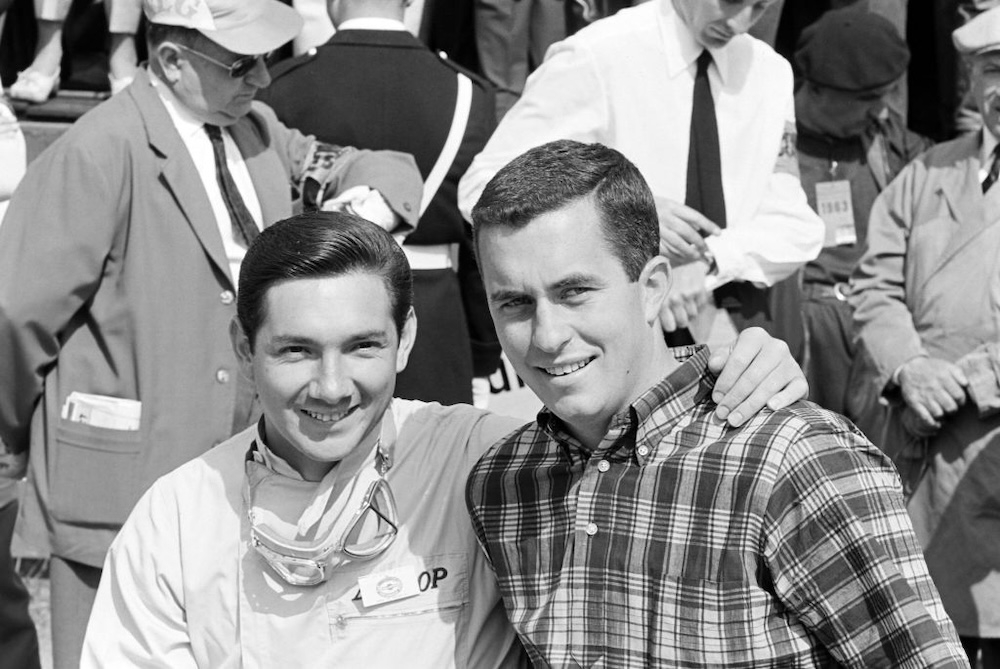
That Jarno shot sent us on a mission to see what sort of interesting Roger Penske photos we could find. And the answer is this one, showing him with NART teammate Pedro Rodriguez at Le Mans in 1963. David Phipps/Getty Images
Q: Perhaps I should be able to deduce this from what has been written but I’m getting old! How much of what the probable engine spec for 2028 and beyond looks like allows Honda and Chevy to leverage or use what they were working on a few years ago for the next generation engine? We had new 2.4 liter hybrid TTV6s being developed and then they were scuttled for, I think what will be either three or four years. While the end spec is still in flux, is it expected that the investment in development Honda/Chevy made will be applicable to the new engine, or is it start from scratch?
Forrester L Morgan, Myrtle Beach
MP: Rather than repeat what’s already been written, here are these lines from the story:
- With only minor variations, the blueprint for the 2.4 is the 2.2 it will replace.
- We know the original 2.4 formula that made it as far as track testing in 2022 is what will serve as the basis of the 2028 formula, but this isn’t a case of pulling those motors out of storage, nor is it a pure copy-and-paste of the previously-written specifications.
- In fact, the 2.4 formula isn’t completely finished and ready for manufacturers to start cutting metal.
- Some slight tweaks to the 2.4 are still in the conceptual phase and the series expects to have the remaining details solidified prior to 2026.
- Although they are similar in almost every way, the greatest difference between the 2.2 and the 2.4 is the fact that the 2.4 is a brand-new engine, and that’s a good thing.
Q: I wonder why IndyCar could not have the same displacement as F1 engines? The formulas were the same through 1951 and encouraged European entries to come to the 500. More manufactures should equal more fans.
Charley Goddard, 79 times at the 500, Muncie, IN
MP: IndyCar could make its engines the same displacement as F1 just as F1 could make its engines the same displacement as IndyCar. There’s nothing stopping either series from doing so, other than the choice by both to follow their own paths. Hope to see you at your 80th in May.
Q: I wonder; if 23XI and FRM received a sizable settlement, will other teams cry foul that the charter agreement hurt them too, leading to them wanting a payout?
Bernardo, TX
KELLY CRANDALL: There are other NASCAR teams who have already said the charter agreement hurts them or they didn’t agree with it, but they signed it for whatever reason they felt they needed to. There won’t be a payout because of what happened with the settlement and what 23XI Racing and Front Row Motorsports get, because part of the settlement is that NASCAR has to rework the charter agreement as it pertains to revenue splits with the teams. And more money is what they were all after to begin with.
Q: I realize that NASCAR has the Betty Jane France Humanitarian Award for persons who have been involved with charitable work with children.
Would it not make sense to have an additional Greg Biffle Memorial Humanitarian Award for persons who undertake additional and significant charitable work that would consider efforts beyond the category of children?
It seems that Greg Biffle is being remembered not only as a great driver, but also as an outstanding Humanitarian.
Wiscowerner, Cedar Grove, WI
KC: You could say that it makes sense, and I don’t think that anyone would argue that Greg Biffle should continue to be recognized. I don’t know if NASCAR plans on doing that. There is also the National Motorsports Press Association, which honored Biffle for his work, and perhaps they’ll continue to do something. No-one would disagree with it, though. Biffle will be remembered for what he did off the track as much, if not more, than what he did on it.
Q: In a statement during the NASCAR trial by a NASCAR executive, he alluded to the strong possibility of another manufacturer entering the series soon. Do you think his statement is in reference to Honda or Dodge (Chrysler)? Or, put another way, do you think the likelihood of it being Honda is greater than the likelihood of Dodge (Chrysler)? Honda has been very notably silent as of late.
Randy, North Carolina
KC: I believe it was Steve O’Donnell that you are referring to who made that statement, and in this case, it was very likely meant to mean Dodge or Ram. They are returning to NASCAR next season and have made it clear they have all intentions of going into the Cup Series again one day. What we know about NASCAR’s timelines and submission processes suggests they would likely be the next manufacturer to join the Cup Series. However, the Honda rumor has been around for years, and there still hasn’t been any movement.
THE FINAL WORD
From Robin Miller’s Mailbag, 31 December, 2013
Q: I’ve recently made it a habit to take on learning about all the old drivers and legends of the USAC days of the ’50s and ’60s. What do you know about Gene Force and Keith Rachwitz? Lots of guys have no wins, so who would you say are the 10 best drivers to never win a race from the days before the 1996 split?
Likewise, there was the CART/USAC split in 1979. Do you consider any of the races drivers won after 1980 (e.g. George Snider, Keith Kaufman, Bobby Olivero) to be legitimate, or do you consider those wins to not have really come in ‘Indy car’ because in the case of Snider and Olivero they weren’t even good enough to run in the top five, and Kaufman wasn’t even an IndyCar driver!
Thanks for the history lesson.
Alex in Florida
ROBIN MILLER: Force qualified at Indy in 1951 (finished 11th) and again in 1960, while Porky (that was Rachwitz’s nickname) attempted to make the show in ’62 and ’63 but had a couple of accidents and failed. Snider was a badass when he arrived in USAC (pole at the Hoosier Hundred in 1965 and front row at Indianapolis in ’66) and always good in sprinters. Olivero was a damn good midget and dirt car racer who qualified for Indy in 1977. Kaufman was tough in sprints.
I think Snider, Johnny Parsons, Steve Krisiloff, Tom Bigelow, Mel Kenyon and Rich Vogler were all good racers who never won in an Indy car, but to my mind Lee Kunzman, was the best. He recovered from serious injuries and finally got a good Indy car ride, only to get hurt again and then made another comeback and almost won at Atlanta in 1979.
Kunzman was as good in a midget and sprint car as anybody I ever saw race.
